

Buying New Construction in the Twin Cities: What to Know Before You Walk Into a Model Home

The model home is designed to make you fall in love. The lighting is perfect, the furniture fits just right, and the coffee smells great. None of that is an accident. A model home is a sales floor, and the friendly person greeting you works for the builder. Before you walk in, here is what I tell my own buyers.
Your first visit decides more than you think
Most builders have a rule: your agent has to be with you, or registered for you, on your very first visit. Show up alone on a Saturday just to look, and you may lose the right to bring your own agent later, even though the builder priced your agent's pay into the home either way. That one rule is the whole reason to call me before the first visit instead of after you have picked a lot.
The price you see is not the price you pay
The sign out front is the base price, for the smallest version of that home on the cheapest lot. From there the numbers climb:
- The lot you actually want usually carries a premium, sometimes a large one
- Structural options, like a finished lower level or an extra garage stall, have to be decided before the build starts
- The design studio is where budgets go to grow, one upgrade at a time
Some of that spending is smart. The lot and the structure are hard to change later, and a good lot holds value. Some of it is the builder's highest margin, finishes you can change yourself later for less. Twenty plus years in the car business taught me how an option sheet works. A design studio is the same sheet with more zeros, and I will help you tell the difference before you sign.
The builder's contract is the builder's contract
It is written by the builder's lawyers, and it reads like it. Timelines can move, prices on some items can move, and your deposit rules are stricter than a normal purchase. That does not make it a bad deal. It makes it a document you want your own person reading with you, line by line, before your deposit is on the line.
New does not mean perfect
People assume a new home needs no inspection. I have walked enough new builds to tell you otherwise. Missed paint is normal. What you are looking for is the real stuff: grading that sends water toward the foundation, a drain that runs lazy, doors and windows that were never adjusted, attic insulation that stops short. Builders fix documented problems before closing because they want the home closed. After closing, the same list goes into a warranty queue. I walk my new construction buyers' homes before drywall when the builder allows it, and again at the final walkthrough, and I recommend an independent inspection even on a brand new home. My clients call me their mini inspector on resale homes. A new build deserves the same eyes.
Questions to ask before you sign
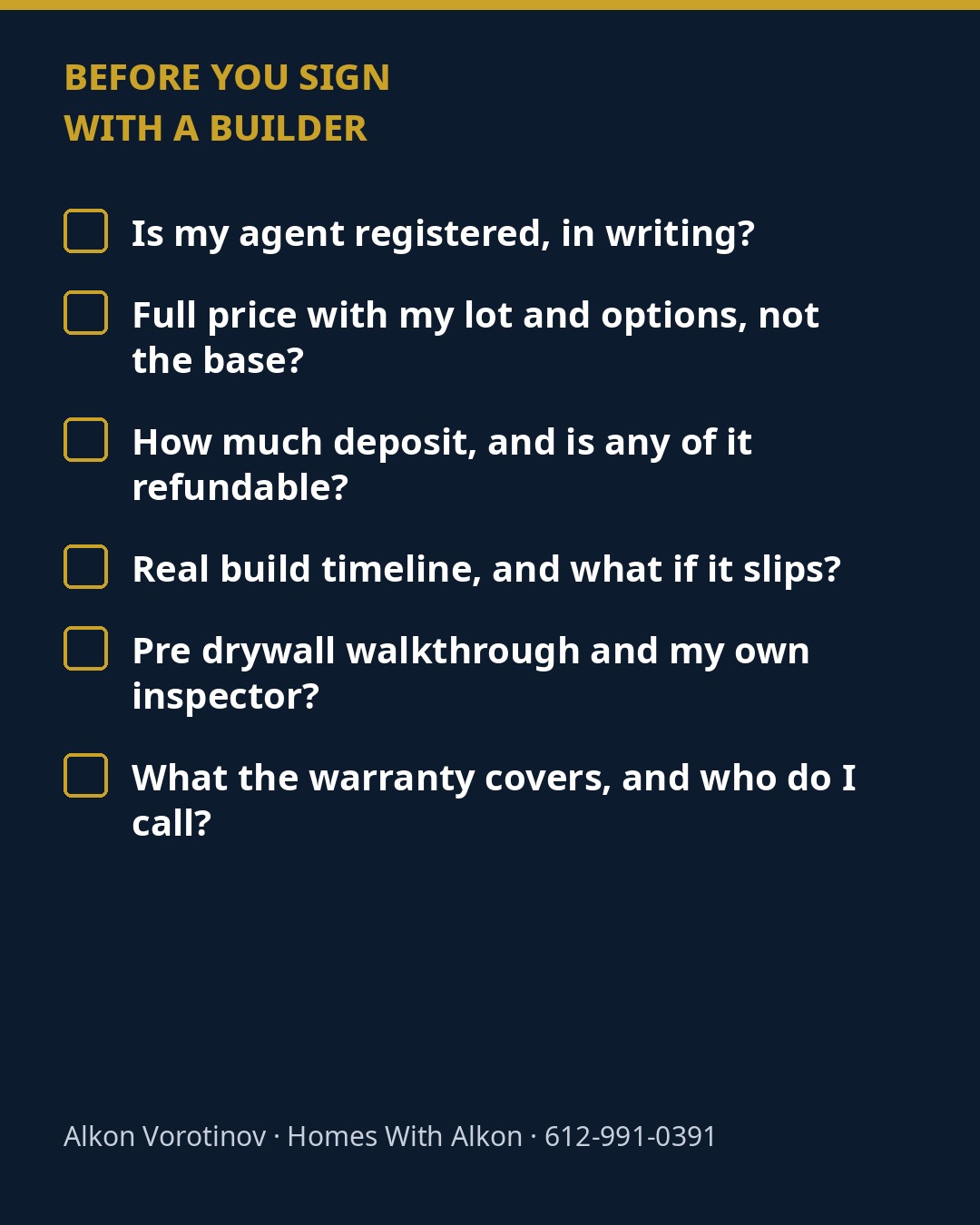
- Is my agent registered, and is that in writing?
- What is the full price with this lot and the options I want, not just the base?
- What deposit is due, and under what terms is any of it refundable?
- What is the real build timeline, and what happens if it slips?
- Can I do a pre drywall walkthrough and bring my own inspector?
- What does the warranty actually cover, and who do I call when something fails?
The short version
A new build can be the right move, and the west and northwest metro are full of good builders putting up good homes. Just walk in with your eyes open and your own person next to you. My job is to make sure you know exactly what you are getting into. The good, the bad, and what it will cost you down the road.
Thinking about building? Book a consultation before your first model home visit and we will make a plan first.
Thinking about a move in the Twin Cities? Book a buyer or seller consultation, or ask what your home is worth. No pressure, just a clear plan.
Book a consultation · What is my home worth? · Call or text 612-991-0391